
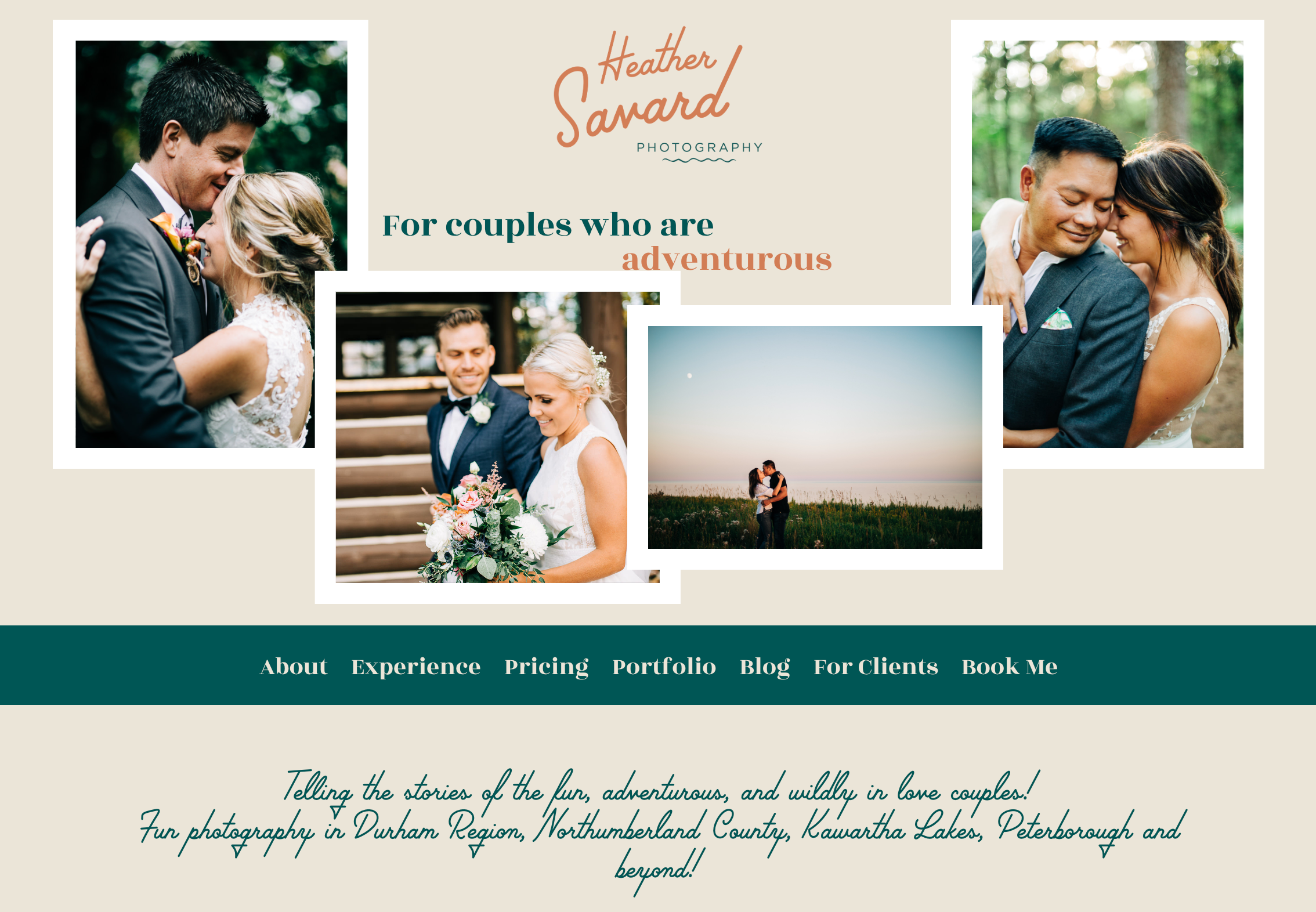
Heather Savard Photography
For couples who are fun, adventurous, and wildly in love!
This case study explores the redesign of the Heather Savard Photography website and the transformation of business processes to improve client experience. The project involved not only updating the website’s design for better usability and visual appeal but also optimizing the behind-the-scenes processes to ensure smoother interactions with clients. Join me as we dive into the design journey, from research and strategy to the final product, and discover how user experience principles were applied to elevate both the business workflow and client engagement.

Overview
This case study highlights the redesign of Heather Savard Photography’s business processes and website, with the goal of enhancing the client experience and streamlining operations. By leveraging my entrepreneurial background and design expertise, I sought to create a more efficient business model and a visually compelling, user-friendly online presence. The project aimed to improve booking rates, better align with potential clients, and position myself as a more specialized photographer, all while helping clients feel more comfortable and confident in front of the camera.

Role
UX/UI Designer
UX Researcher
Front-end Developer
Project Type
Service Design & UX Design
Tools
WordPress
Procreate
Adobe Photoshop
Dubsado
Affinity Designer & Publisher
Problem Statement
Heather Savard Photography faced challenges with a disconnect between my brand design and the photos showcased on my website, leading to a misalignment with potential clients. This, along with a broad range of services, impacted my ability to position myself as an expert. Clients also often felt uncomfortable in front of the camera, affecting their overall experience. The goals for the redesign were to align my brand and website with the right audience, narrow the service offerings to highlight my expertise, and create a more comfortable, engaging experience for clients.
Initial User Research
To better understand the challenges my clients were facing, I conducted extensive user research.
Research Goals
-
Identify common behaviours and experiences related to selecting a wedding photographer.
-
Understand client expectations and frustrations.
-
Determine what information clients need on the website.
Target Audience
-
Age: 25-40
-
Engaged Couples in Canada.
-
Looking for a photographer for their wedding.
-
Past clients and couples who didn’t book.
Interview Questions
-
What information did you look for when choosing a photographer?
-
How did you feel about the process of booking and working with a photographer?
-
What challenges did you face when planning your wedding photography?

Analysis
I surveyed 10 couples to gather insights about their photography experience and expectations. From their responses, I identified several key insights that helped inform the redesign, including the following important factors for clients:
Positives
-
Clients appreciated detailed information about the photography process.
-
Clear pricing and packages were highly valued.
Frustrations
-
Lack of a clear process led to confusion.
-
Broad range of services made the photographer seem less of an expert.
-
Clients struggled with feeling comfortable in front of the camera.
-
Need for guidance on wedding timelines.

Competitive Audit
To better understand how other photographers were positioning themselves, I conducted a competitive analysis of similar businesses. This research focused on evaluating how competitors were showcasing their services, engaging with clients, and presenting their websites. By examining their strengths and weaknesses, I was able to identify gaps and opportunities for improvement in my own website and business processes.
-
Lack of Contact Forms: Many photographers’ websites didn’t have an easily accessible contact form, making it difficult for potential clients to get in touch quickly.
-
Missing Basic Pricing Information: Several websites didn’t provide pricing details, which led to unnecessary friction for clients looking for transparency.
-
Unclear Messaging: The messaging on some websites was vague, not clearly articulating the photographer’s unique value or target audience.
-
Overcrowded Portfolios: Some photographers showcased too many photos, which could overwhelm visitors. Simplifying portfolios by focusing on key shots could make a stronger impact.
-
Poor Mobile Optimization: A number of photographer websites weren’t optimized for mobile, making the browsing experience frustrating for users.
-
Limited Call-to-Actions: Some websites didn’t have clear, compelling Call-to-Actions, which made it harder for visitors to take the next step.
Design & Implementation
The redesign of Heather Savard Photography focused on improving both the client experience and administrative efficiency. By addressing the key challenges identified during the research phase, I was able to create a more streamlined process for both clients and the business. The goal was to ensure that every interaction, from initial inquiry to final booking, felt seamless and engaging while also improving back-end processes to reduce administrative workload.
Client Experience
The client experience was at the heart of the redesign, ensuring that potential clients could easily navigate the website, understand the services, and feel comfortable throughout the entire process.

– original branding –
Identified Key Issues
- Website lacked clear process information.
- Pricing was unclear.
- Generic branding.
- Services were too broad.
- Client discomfort during photoshoots.
Design Solutions
- Limited services to couple and wedding photography.
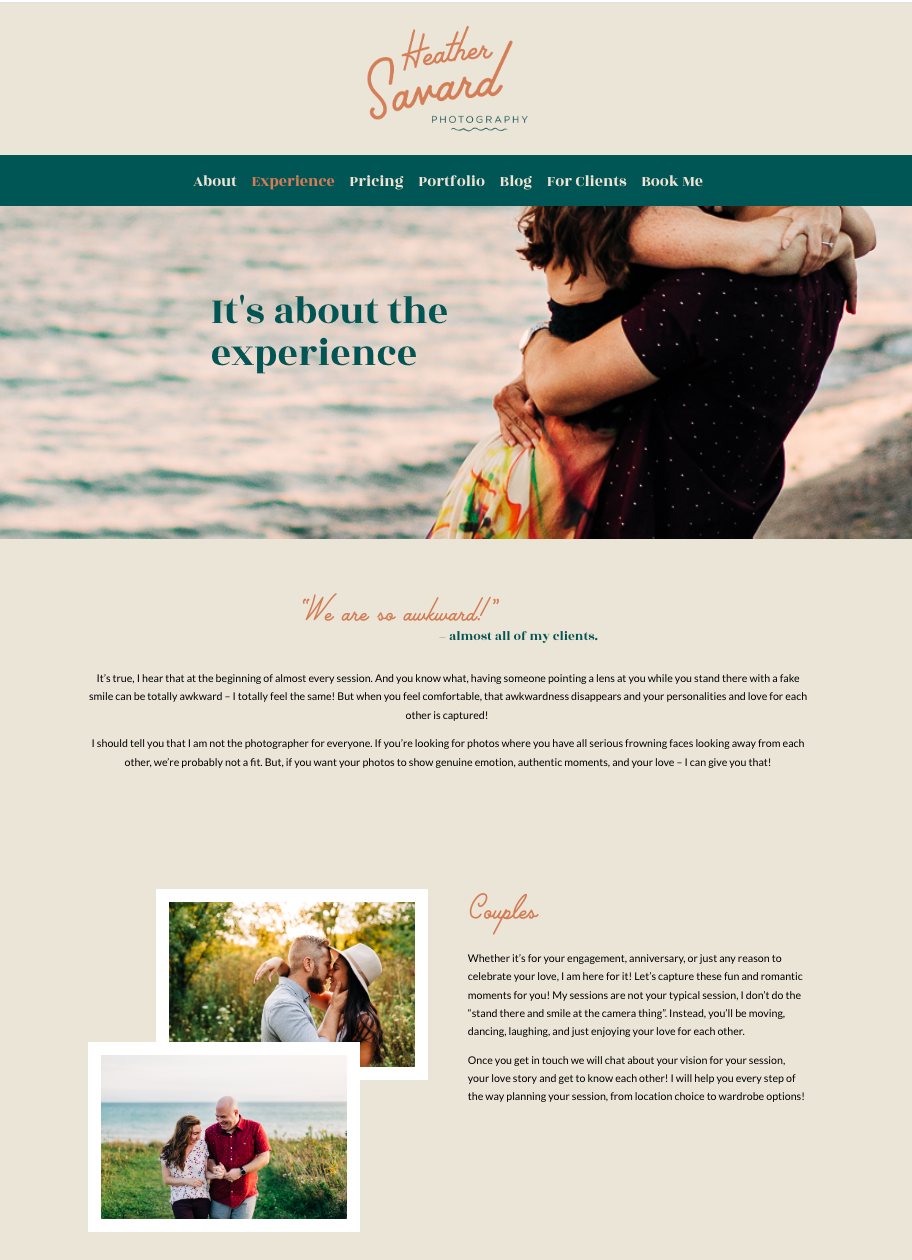
- Rewrote website copy to detail the experience, process, and pricing.
- Clarified messaging to attract “fun, adventurous, and wildly in love” couples.
- Redesigned brand to match style.
- Created a lead capture form to learn more about potential clients.
- Featured complete session overviews in the portfolio.
- Developed a private webpage with in-depth information and scheduling options.
- Offered complimentary engagement sessions to build client comfort.
– new website –

Administrative Efficiency
Improving administrative efficiency was essential to creating a more streamlined workflow, reducing time spent on manual tasks, and allowing for better client management.

Identified Administrative Challenges
-
Time-consuming manual tasks.
-
Repetitive inquiries.
-
Inefficient booking and consultation process.
Process Improvements
-
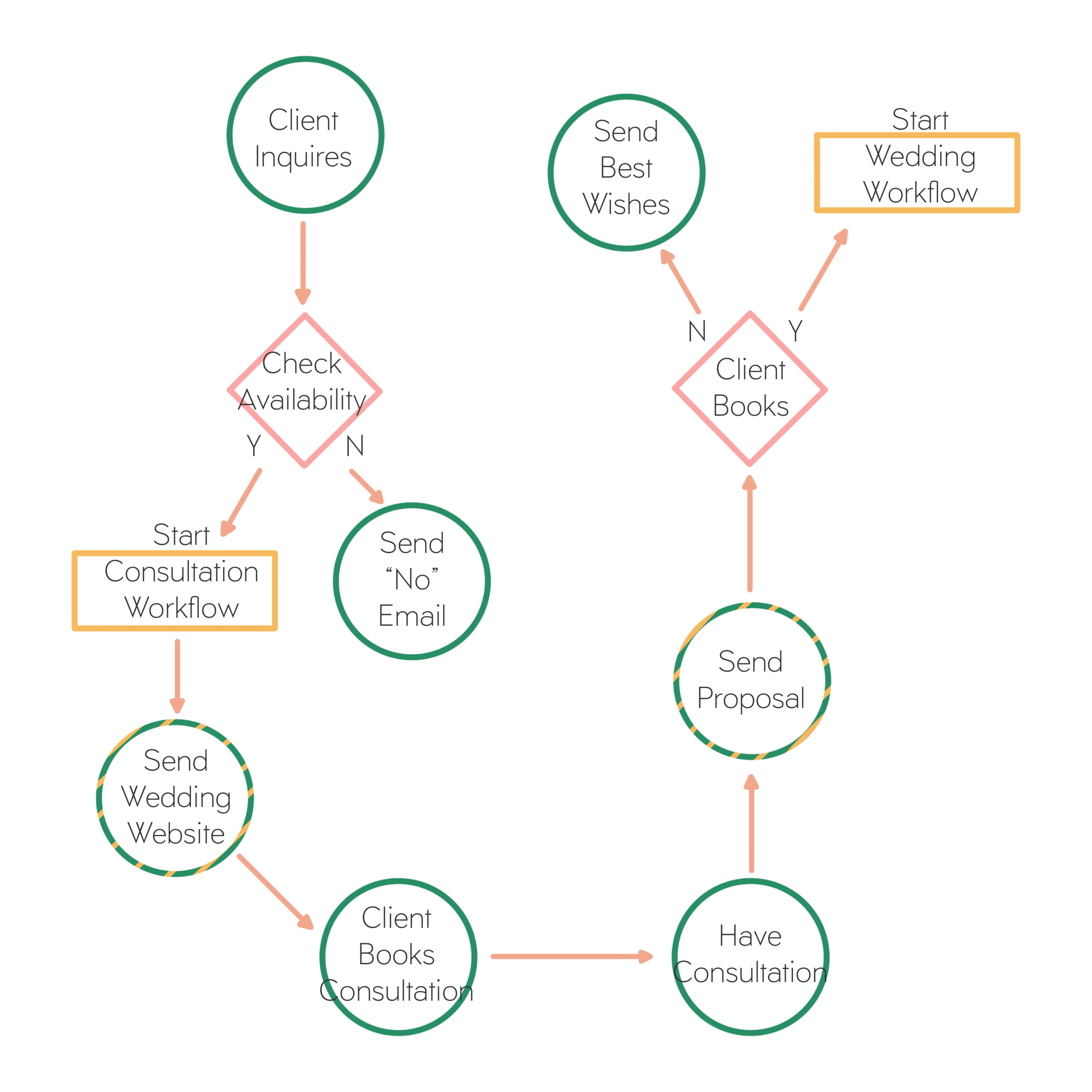
Developed workflows for lead management.
-
Created canned emails for availability responses.
-
Automated booking confirmations with Google Meet links.
-
Prepared proposals and contracts to automate post-consultation.
-
Set up reminder emails for payments and questionnaires.
-
Created engagement session workflows with questionnaires.
-
Centralized client forms, contracts, and invoices in a client portal.
Results & Impact
The redesign brought significant improvements in both client experience and administrative efficiency. Here’s a closer look at the impact:

Client Experience Improvements:
- Higher Quality Leads: Increased inquiries from couples aligned with my style and personality.
- Reduced Inquiries: Clients arrived at consultations with fewer questions due to comprehensive website information.
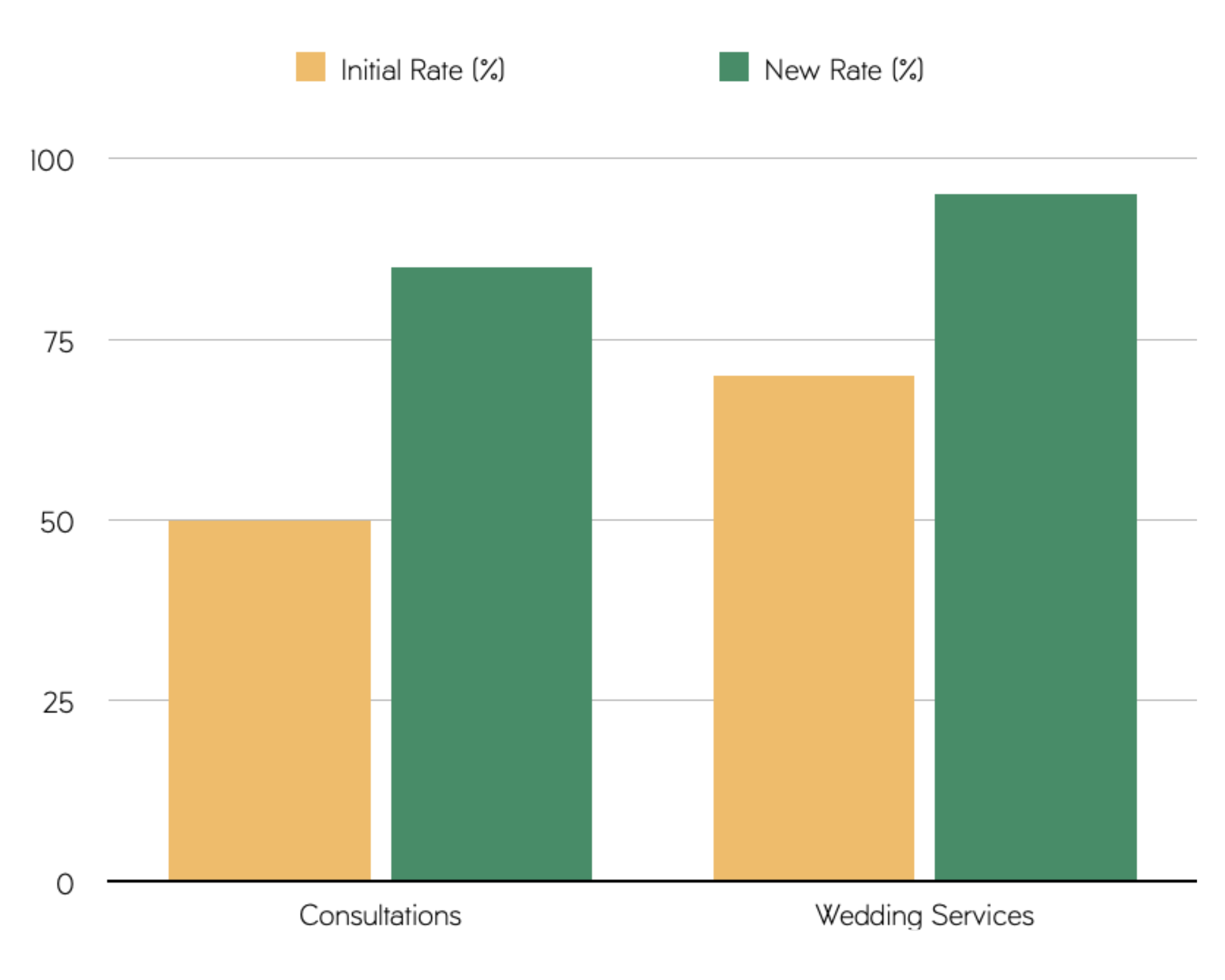
- Higher Booking Rate: Booked 95% of couples I met with and 85% of those who inquired.

Administrative Efficiency Gains:
-
Time Savings: Workflows and canned emails significantly reduced administrative tasks.
-
Improved Client Communication: Automated processes ensured timely and consistent communication.
-
Enhanced Client Satisfaction: Positive feedback from clients about the smooth and professional booking process.
Key Takeaways

Enhanced Client Experience
- Clearer communication and streamlined booking process.
- Personalized experience for each couple,

Increased Efficiency
- Reduced administrative tasks with automated workflows and canned emails.
- Focused more time on creative work and client interactions.

Business Growth
- Attracted more aligned clients.
- Higher booking conversion rates.
Lessons Learned
-
The Importance of Clear Communication:
I learned that clear messaging and well-organized information on the website can significantly reduce client confusion and inquiries, leading to a smoother experience for both clients and the business. -
Streamlining Processes Leads to More Creativity:
Automating administrative tasks freed up time, allowing me to focus more on creative work and client interactions, which is crucial for maintaining a personal touch while being efficient. -
Targeting the Right Audience Is Key:
Understanding my ideal clients and refining my brand helped attract couples who truly aligned with my style, which resulted in higher-quality leads and bookings. -
Iterative Design Is Crucial:
Testing and adjusting the website and processes through real-world feedback allowed me to make improvements that directly benefited both the client experience and business operations.
